When back-to-school shopping rolls around, parents of children with scoliosis often ask me: “Can backpacks make scoliosis worse?” It’s an important question, and the answer is nuanced. Let’s go step by step.
Do Backpacks Cause Scoliosis?
The short answer is no. Backpacks do not cause scoliosis. Multiple medical sources, including the American Academy of Orthopaedic Surgeons and the American Association of Neurological Surgeons, emphasize that scoliosis is not caused by carrying a heavy load on your back. The most common type—adolescent idiopathic scoliosis—develops from a mix of genetic and biological factors, not from lifestyle or posture.
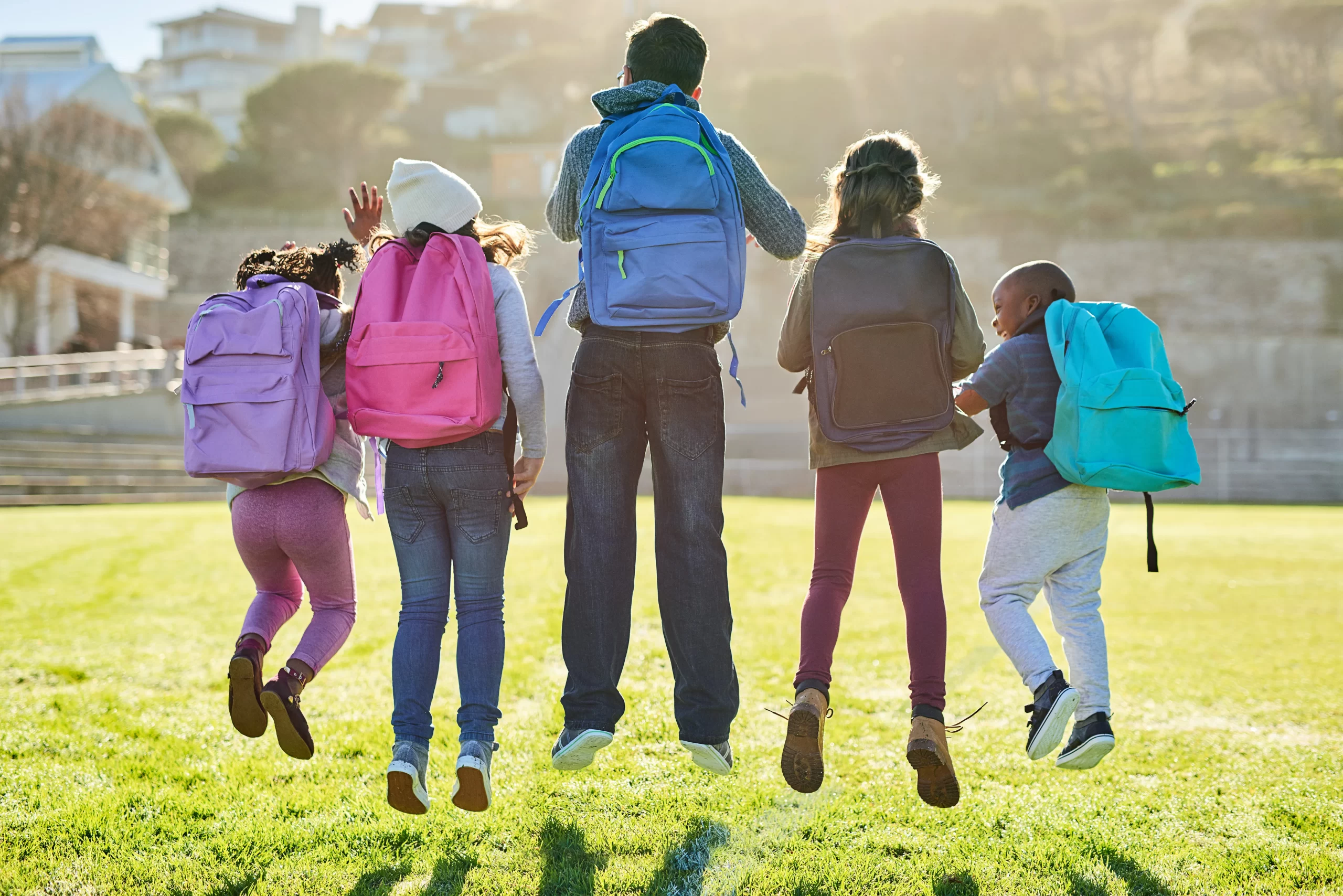
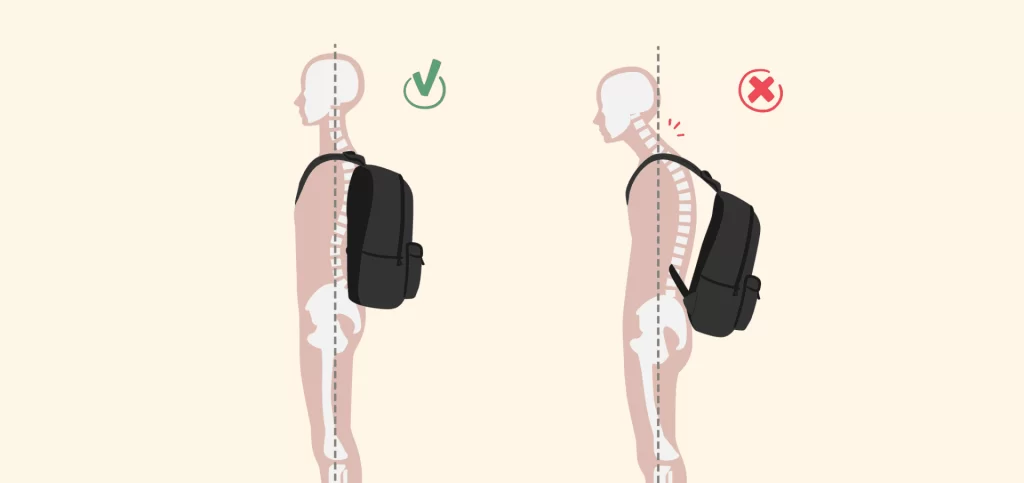
That said, heavy or poorly fitted backpacks can exacerbate symptoms in children and teens with scoliosis. Overloaded bags may lead to back pain, muscle fatigue, and changes in posture that place extra strain on the spine. The American Academy of Pediatrics (AAP) notes that heavy backpacks may cause children to lean forward, arch their back, or lean to one side—all of which can be more uncomfortable for a child with scoliosis.
How Much Weight is Safe?
The AAP recommends that a child’s backpack weigh no more than 10–15% of their body weight.
Example: For a child who weighs 100 pounds, the backpack (including the bag itself) should weigh no more than 10–15 pounds.
If the empty bag already weighs 3 pounds, that leaves only 7–12 pounds for books, lunch, and supplies.
This is why lightweight bags are helpful—every pound saved on the bag itself is an extra pound available for school materials.
How Should a Backpack Fit?
Fit is just as important as weight. A poorly fitted bag can create unnecessary strain even if it’s within the safe weight range. According to the AAP:
The top of the backpack should sit about 1–2 inches below the shoulders.
The bottom of the backpack should rest comfortably in the small of the back, not lower than the waistline.
Straps should be wide and padded to distribute weight evenly.
Both straps should always be worn to avoid asymmetrical loading.
Children with scoliosis may already favor one side of their body, so ensuring symmetry in how they wear the bag is especially important.
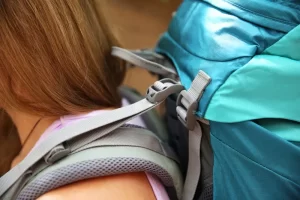
Load lifter straps:
These small straps connect from the top of the shoulder strap to the top of the pack. When tightened, they bring the bag closer to the body, reducing backward pull and keeping the spine more upright.
- Pros: Great for posture, especially on longer walks.
- Cons: Not all school backpacks have them, and they can look “technical” or “hiking-style,” which some kids may resist.
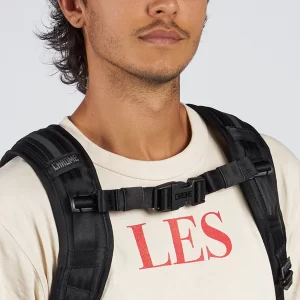
Sternum strap (chest strap):
This strap connects the two shoulder straps across the chest, helping prevent the straps from slipping off the shoulders and improving load distribution.
- Pros: Keeps the bag snug and centered, helpful for kids who slump or twist.
- Cons: Some children find them restrictive, and they’re not always considered “stylish.”
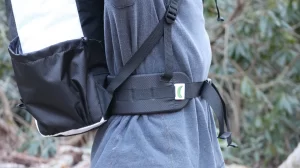
Hip Belt:
A padded belt around the hips transfers weight from the shoulders to the pelvis, where the body can carry heavier loads more comfortably.
- Pros: Significantly reduces shoulder strain, ideal for heavier loads.
- Cons: Adds bulk and is less common on everyday school bags—many kids may find it unnecessary or unfashionable.
Final Thoughts
Backpacks don’t cause scoliosis, but the wrong bag—or carrying it the wrong way—can make back pain worse and add extra strain. By keeping the load under 10–15% of body weight, ensuring a proper fit, and using features like load lifters, sternum straps, or hip belts when possible, you can make school days more comfortable for a child with scoliosis.
Weigh it: total pack ≤ 15% of body weight. If over, remove items or switch to a lighter bag.
Adjust order: hipbelt → shoulder straps → sternum strap → load lifters (tension just enough to pull the pack in).
Height check: top of the pack 1–2″ below shoulders; bottom in the small of the back.
Two straps on, snug: keep the load centered; avoid one-strap carry.
Heaviest items near the back panel; small items out front.