Bracing for Adult, Juvenile & Infantile Scoliosis in Charlotte, NC
ScoliBrace: A Custom 3D Solution for Scoliosis Treatment
At Simply Move Chiropractic, I see people of all ages who are living with scoliosis. Whether the curve was found in infancy, during the teenage years, or much later in life, I understand how the diagnosis can feel overwhelming. The good news is that there are more effective, non-surgical options available today than ever before. One of the most powerful tools I use to help manage and correct scoliosis is custom bracing, especially when combined with specific exercises, posture retraining, and chiropractic care.
Case 1: Infantile Scoliosis (Age 3 Years)
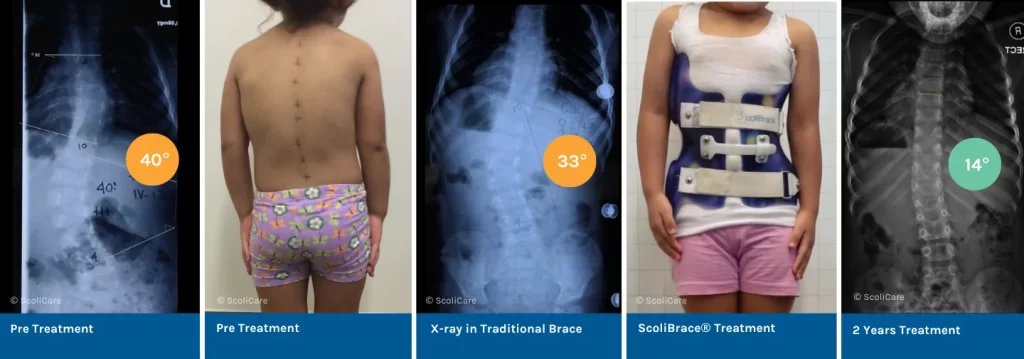
The first case involves a 3-year-old girl who was diagnosed with a 40° thoracolumbar curve and a smaller 10° compensatory curve. Her family initially tried a standard rigid brace, but it only reduced the curve to about 33° while she was wearing it. Unsatisfied with the results, her parents sought a second opinion and transitioned to a custom over-corrective brace (ScoliBrace), paired with a home-based corrective exercise program (ScoliBalance®).
After 24 months of treatment, her out-of-brace curve dropped from 40° to 14°—that’s a 65% reduction. The changes weren’t just on x-rays; her trunk alignment, posture, and overall balance visibly improved as well.
What stands out to me in this case is how early action and proper brace design can dramatically change a child’s spinal development. The first brace made only a small difference because it wasn’t designed to fully correct. Once the custom brace applied targeted over-correction, her results completely changed course.
This over-corrective approach guides the body and spine into a posture that is the opposite of how the scoliosis is shaped, often achieving curve reduction and improving the overall appearance of the body. It’s suitable for patients with infantile, juvenile, adolescent idiopathic, and some neuromuscular scoliosis between 25 to 60 Cobb angle.
My Takeaways
Act early: The younger the spine, the more flexible it is. Acting at age 3 allowed the brace to guide her growth in a positive direction.
Brace design matters: The fit and correction angle make all the difference. The right brace isn’t just about support—it’s about guiding growth.
Exercise supports success: Strengthening and posture exercises help the spine adapt to the new position created by the brace.
Follow-up is key: As the child grows, so should the plan. Ongoing monitoring ensures the brace continues to do its job.
When I work with very young children who have early-onset scoliosis here in Charlotte, I focus on these same principles. I help families understand the “why” behind the brace, I teach them how to pair exercises with bracing, and I closely monitor progress over time. I want parents to see that early intervention can lead to incredible, life-changing results.
Case 2: Adolescent Scoliosis (Age 17 Years)
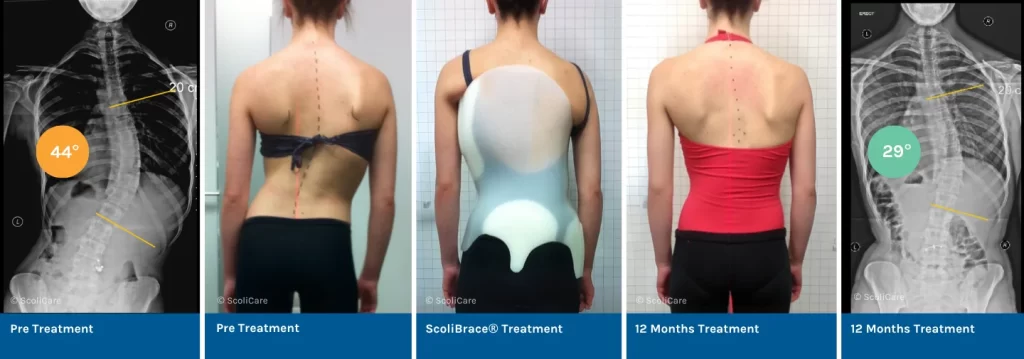
The second case features a 17-year-old ballet dancer who had a 44° thoracic scoliosis curve. She was already skeletally mature, meaning her bones had stopped growing (Risser 5). Many would assume it was “too late” for bracing to help—but that turned out not to be true.
She was fitted with a custom ScoliBrace and started a scoliosis-specific exercise program designed to strengthen and balance her spine without limiting her flexibility for dance. Over the course of 12 months, her curve decreased from 44° to 29°—a 15° improvement—and her pain levels dropped dramatically.
What strikes me about this case is how effective bracing can still be, even after growth plates close. The reduction in curve magnitude, pain, and visible asymmetry all contributed to her ability to stay active in dance, which was one of her biggest goals.
My takeaways for teens and parents:
It’s not too late: Even at 17, improvement is possible.
Motivation drives success: Her commitment to both wearing the brace and following the exercise plan made all the difference.
Pain relief matters: Sometimes, success means reducing daily pain and improving body balance—not necessarily perfect correction.
Avoiding surgery is a win: For many families, achieving curve stability or reduction without surgical intervention is life-changing.
When I work with teens, I focus on balancing realistic expectations with meaningful goals—like reducing pain, improving confidence, and avoiding surgery when possible. I help them see that scoliosis care is about function and freedom, not just curve numbers.
Case 3: Adult Scoliosis (Age 78 Years)
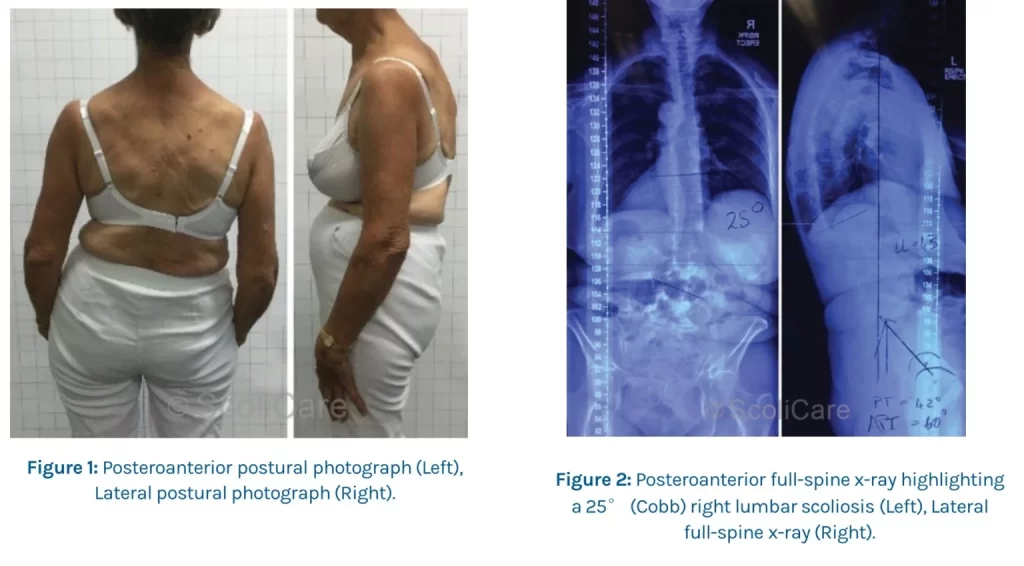
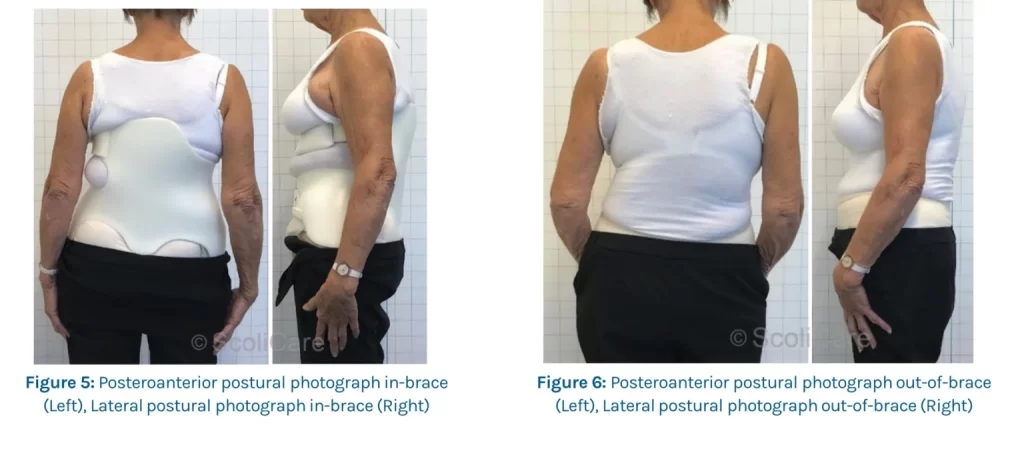
The final case involves a 78-year-old woman who had been living with scoliosis since her youth. Over the years, the curve and pain worsened, leaving her with a 25° right lumbar curve, visible posture imbalance, and daily discomfort. She also had osteoporosis and a prior compression fracture, which complicated her situation.
She was fitted with a custom ScoliBrace for part-time wear (starting at just 2 hours per day and building up to about 7 hours) and began a scoliosis-specific exercise program. After 14 months, her posture and spinal balance improved significantly. Her pain decreased, her ability to perform daily tasks improved, and her overall quality of life went up—without needing surgery or medication changes.
What I find inspiring about this case is that age didn’t limit improvement. While we don’t usually expect large curve reductions in adults, the improvements in function, balance, and comfort can be truly life-changing.
My takeaways for adult scoliosis patients:
The goal changes: For adults, the focus shifts to reducing pain, improving posture, and maintaining independence.
Bracing can still help: Even wearing a brace part-time can reduce pain and fatigue by supporting better alignment.
Exercise matters more than ever: Strengthening and mobility exercises help keep the spine functional and resilient.
Progress looks different: It’s not always about the x-ray—it’s about how you feel and move every day.
In my practice, I help adult scoliosis patients set clear, realistic goals that focus on comfort, strength, and confidence. We build care plans that combine bracing, exercise, posture retraining, and chiropractic adjustments to help them stay active and strong.
Why I Combine Bracing with Corrective Chiropractic & Exercise
Scoliosis bracing works best when it’s part of a complete care plan. Here’s why I integrate it with movement-based chiropractic and exercise at Simply Move Chiropractic:
It can reduce or stabilize curves. In children and teens, bracing can actually reduce Cobb angles. In adults, it can halt or slow progression.
Customization is everything. I only recommend braces that are fully customized to the patient’s 3D body shape—like ScoliBrace—because fit directly determines outcome.
Exercise makes the results last. Bracing positions the spine; exercise teaches your muscles to hold that correction.
It works at any age. Whether you’re 3 or 78, bracing can provide value—either by reshaping the spine or improving posture and comfort.
Chiropractic support enhances results. Gentle chiropractic adjustments, soft tissue therapy, and posture correction help patients adapt to the brace and maintain mobility.
My Process for Scoliosis Patients in Charlotte
When someone comes to me for scoliosis care, here’s what I do step by step:
Comprehensive evaluation: I assess your posture, spinal balance, flexibility, muscle tone, and pain points.
Determine if a brace is appropriate: Not every patient needs one right away. I weigh factors like curve size, skeletal maturity, symptoms, and progression risk.
Coordinate custom bracing: If indicated, I work with experienced orthotists who design ScoliBrace and other custom solutions for my patients.
Create an exercise and movement plan: I teach scoliosis-specific corrective exercises and help you build them into your daily routine.
Monitor progress: I regularly recheck posture, pain levels, and brace wear tolerance. Adjustments are made as needed.
Keep goals functional: Whether your goal is to sit at work without pain, dance, garden, or simply stand straighter, I tailor care around your life.