
If you’re dealing with persistent neck pain in Charlotte, there’s a good chance the problem isn’t just “tight muscles” or poor posture alone. One of the most common — and often overlooked — causes of chronic neck pain is cervical facet syndrome. In my office at Simply Move Chiropractic here in Charlotte, NC, I see this condition regularly in people who sit at desks, drive long hours, train hard in the gym, or have a history of whiplash or repetitive strain.
What is Cervical Facet Syndrome?
Cervical facet syndrome occurs when the small stabilizing joints in your neck (facet joints) become irritated, stiff, or inflamed. These joints guide motion and protect your spinal cord, so when they’re not moving well, pain, tightness, and even headaches can develop.
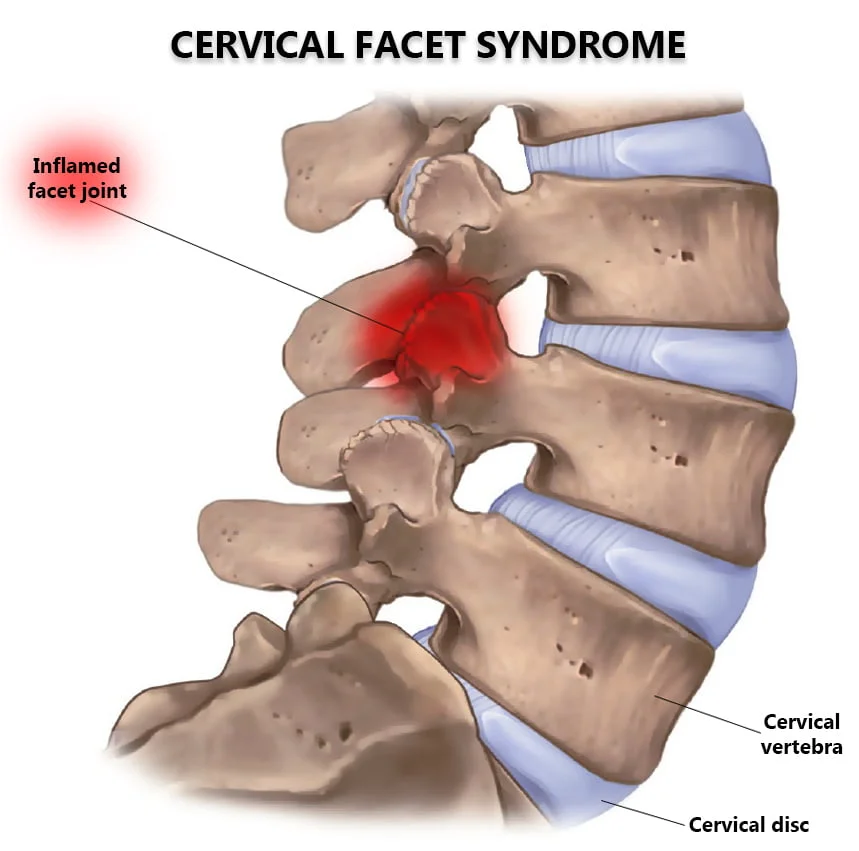
Common Causes of Cervical Facet Syndrome
Facet joints are designed to glide smoothly. When they lose motion or take too much stress, irritation follows. Some of the most common causes I see include:
• Poor posture (especially forward head posture at desks and phones)
• Repetitive neck movements or long periods of static positioning
• Whiplash injuries from car accidents
• Sports injuries or heavy lifting
• Degenerative changes with aging
• Muscle imbalances around the neck and upper back
Over time, these stresses reduce joint mobility and overload surrounding muscles, leading to pain and stiffness that just doesn’t go away on its own.
Symptoms of Cervical Facet Syndrome
Cervical facet pain often feels different from disc pain or nerve compression. The most common symptoms include:
• Dull, aching pain on one side of the neck
• Stiffness when turning your head
• Pain that gets worse with extension or rotation
• Upper shoulder or between-the-shoulder-blade tightness
• Headaches that start at the base of the skull
• Localized tenderness near the spine
Unlike true nerve pain, facet pain usually doesn’t cause numbness or tingling into the hands, but it can be very limiting with everyday movement.
How I Diagnose Cervical Facet Syndrome in My Office
In my Charlotte office, diagnosis starts with a detailed history and movement-based exam. I look at:
• How your neck moves in all directions
• Which positions reproduce your pain
• Joint motion quality
• Muscle tone, trigger points, and stability
• Posture and breathing mechanics
Most cases of cervical facet syndrome can be diagnosed clinically without imaging. However, if your symptoms don’t improve, worsen, or show red flags, I may recommend X-rays or MRI to rule out disc herniation, fracture, infection, or serious degeneration.
Red Flags That Require Further Evaluation
While cervical facet syndrome is very common and treatable, certain symptoms should never be ignored:
• Progressive arm weakness
• Numbness or tingling spreading into the hands
• Loss of coordination
• Severe trauma or car accident history
• Unexplained weight loss or night pain
• Fever with neck pain
If any of these are present, imaging and medical co-management are important.
How I Treat Cervical Facet Syndrome at Simply Move Chiropractic
No two neck pain cases are exactly the same. While the tools below form the foundation of care in my office, every patient receives a customized treatment plan based on their history, exam findings, goals, and how their body responds to care. Some people need more stability work, others need more tissue release or decompression — and I adjust your plan as you progress.
1. Rehabilitation Exercises (The Foundation of Correction)
This is where real change happens. I use targeted exercises to improve:
• Deep neck flexor strength
• Scapular (shoulder blade) stability
• Thoracic spine mobility
• Postural endurance
• Breathing and core control
In most cases, exercises are the primary driver of lasting correction. They stabilize the joints from the inside out and prevent the cycle of flare-ups.
2. Active Release Technique (ART)
ART helps break up restrictions in:
• Upper traps
• Levator scapulae
• Suboccipitals
• Scalenes
• Sternocleidomastoid
By freeing these tissues, the facet joints can move more normally again.
3. Dry Needle Therapy
Dry needling is excellent for calming hyperactive muscles and reducing pain quickly. It allows the nervous system to reset muscle tone and improves blood flow in stubborn trigger points.
4. Cervical Traction / Decompression
For some patients, I incorporate gentle cervical traction to unload the joints, reduce pressure in the neck, and improve mobility. Traction can help relieve stiffness, calm irritated facet joints, and create space for better movement — especially when combined with rehab and soft tissue work.
5. Class IV Red Laser Therapy
I use a Class IV dual-wavelength laser to reduce inflammation and speed up tissue healing. Laser therapy increases cellular energy production and helps calm irritated facet joints and surrounding muscles.
Treating Cervical Facet Syndrome in Charlotte, NC
If you’re searching for treatment for cervical facet syndrome in Charlotte, NC, my goal isn’t just to relieve pain — it’s to restore proper motion, stability, and long-term control of your spine. Most patients start to feel relief quickly, but the real success comes from combining the right tools in the right amounts for your specific case:
✔️ Corrective rehab
✔️ ART
✔️ Dry needling
✔️ Cervical traction (when appropriate)
✔️ Laser therapy
This personalized, integrated approach helps your neck move better, feel better, and stay better.
If neck pain is holding you back, I’d love to help you get back to living and moving fully again here in Charlotte.