As a chiropractor at Simply Move Chiropractic here in Charlotte, I work with many patients who’ve been told to “watch and wait” when it comes to scoliosis. While that advice is common, it often overlooks something critical: scoliosis is not just a curve in the spine—it’s a problem of imbalance and instability. If we don’t address the muscular and neurological imbalances that support that curve, the spine has no reason to stay stable. Over time, that can mean progression, pain, and loss of function.
That’s where ScoliBalance therapy comes in. It’s a non-surgical, rehabilitation-based approach designed to improve spinal stability by correcting the underlying imbalances that contribute to scoliosis.
Why Muscle Imbalances Matter in Scoliosis
Your spine is held upright and controlled by a complex system of muscles, ligaments, and nervous system input. In scoliosis, that system becomes asymmetrical:
Muscles on one side of the curve often become overactive and tight
Muscles on the opposite side become lengthened, weak, and under-responsive
Deep stabilizing muscles lose proper coordination
This creates instability. The spine isn’t being supported evenly, so it drifts toward the side that has more tone and control. Over time, that imbalance reinforces the curve.
Think of it like a tent where half the ropes are tight and the other half are slack. The structure doesn’t collapse immediately—but it leans, twists, and becomes more vulnerable with every gust of wind.
That’s why simply watching and waiting is rarely a good idea. If we don’t actively restore balance, the body continues to reinforce the faulty pattern. In kids and teens, that can mean rapid progression during growth spurts. In adults, it often means increasing pain, stiffness, and postural breakdown.
How ScoliBalance Therapy Works
ScoliBalance is a customized scoliosis rehabilitation program that focuses on three core goals:
Restore muscular balance
Improve postural control
Stabilize the spine in a corrected position
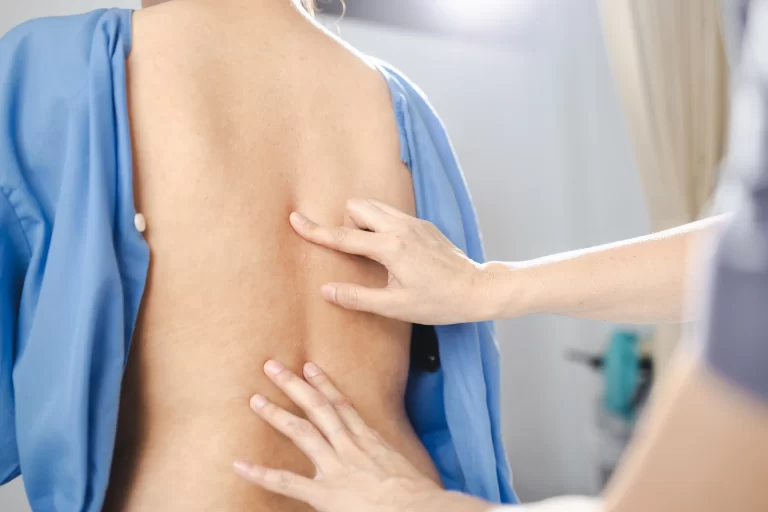
At Simply Move Chiropractic in Charlotte, I start with a detailed assessment of your curve pattern, posture, breathing mechanics, muscle tone, and movement habits. Every scoliosis curve is different, so your program has to be individualized.
From there, ScoliBalance therapy typically includes:
1. Curve-Specific Exercise Training
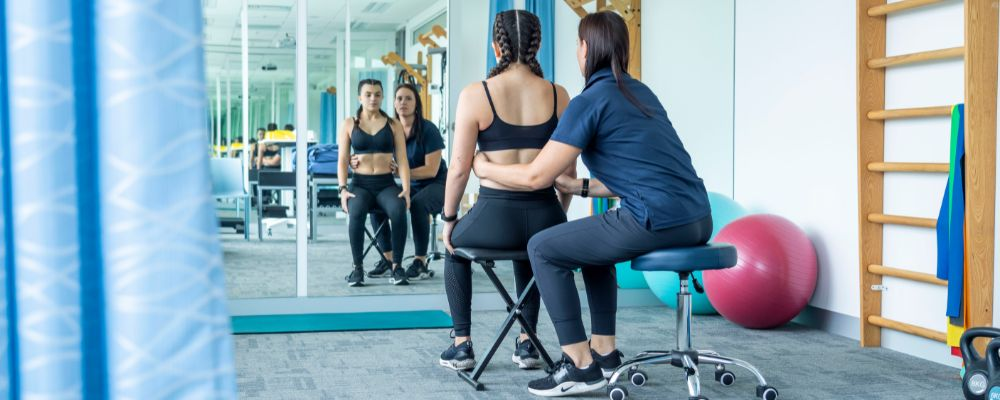
These aren’t generic “core exercises.” They’re designed around your exact curve pattern. Some examples of what exercises might look like include:
Asymmetrical stabilization drills
You might hold a corrected posture while resisting gentle forces from different directions to train your nervous system to keep you centered.Rotational breathing exercises
These help expand the compressed side of the rib cage and restore more symmetrical breathing mechanics.De-rotation movements
We work to counter the twist that often comes with scoliosis, retraining the spine to move more evenly.Balance and coordination training
Standing on unstable surfaces while maintaining a corrected posture helps reinforce proper spinal control.
These exercises teach your body not just what “straight” looks like—but how to hold it.
2. Neuromuscular Re-education
Scoliosis isn’t only about muscles—it’s about how the brain controls them. ScoliBalance therapy trains your nervous system to recognize and maintain a more balanced posture automatically. Over time, this reduces the constant tension and fatigue that many scoliosis patients feel.
3. Manual Therapy and Mobility Work
In many cases, I combine ScoliBalance with hands-on techniques to:
Why Bracing May Still Be Part of the Plan
While ScoliBalance is non-surgical, that doesn’t mean bracing is off the table. In some cases—especially in growing adolescents with moderate to severe curves—a brace can be a necessary and effective addition.
The key difference is this:
- Scolibrace provides structure from the outside, helping hold the spine in a corrected position.
- ScoliBalance therapy works from the inside, training your muscles and nervous system to actively maintain that alignment and build long-term stability.
When used together, bracing and rehab can be far more effective than either approach alone. The brace provides external support, while the exercises train the muscles and nervous system to eventually take over that role.
What Patients in Charlotte Can Expect
When patients start ScoliBalance therapy at Simply Move Chiropractic, they can expect:
A thorough scoliosis-specific evaluation
A customized exercise and rehab plan
One-on-one guidance in learning each movement correctly
Progressive challenges as posture and control improve
Clear goals focused on stability, function, and long-term spine health
This isn’t a passive treatment. You’re actively involved in retraining your body—and that’s exactly why it works.
Why This Approach Is Effective for Charlotte Residents
Charlotte is an active city. Whether you’re a student, a runner, a desk worker, or a parent juggling everything at once, your spine needs to be strong, adaptable, and stable.
ScoliBalance therapy doesn’t just aim to reduce a number on an X-ray—it aims to help you:
Move better
Stand taller
Breathe more freely
Feel more confident in your body
By addressing muscular imbalances and instability directly, we’re not just watching scoliosis happen—we’re doing something about it.
If you or your child has scoliosis and you’ve been told to “wait and see,” I encourage you to explore a more proactive option. At Simply Move Chiropractic in Charlotte, ScoliBalance therapy gives you a way to stabilize your spine, reduce progression risk, and take control of your scoliosis journey—without surgery.