If you’re experiencing lower back pain, tingling, or weakness that radiates into your legs, there’s a chance you’re dealing with a lumbar disc herniation. As a chiropractor in Charlotte, NC, I help patients navigate this condition every day. Whether your symptoms came on suddenly after lifting something heavy or gradually worsened over time, the right combination of conservative care can make a major difference.
What Is a Lumbar Disc Herniation?
Between each vertebra in your spine are intervertebral discs—shock-absorbing structures made of a tough outer layer (annulus fibrosus) and a soft inner gel (nucleus pulposus). A lumbar disc herniation happens when the inner material pushes out through a tear or weakened spot in the outer layer, often pressing on nearby nerves.
Most herniations happen in the lumbar spine—the lower back—because this region carries most of your body’s weight and is heavily involved in bending, lifting, and twisting. When a disc herniates and compresses a spinal nerve root, symptoms can extend far beyond the spine, often down into the buttock, thigh, or lower leg.
Not all herniations are the same. Some are small and cause mild discomfort, while others are large enough to produce significant nerve compression and neurological symptoms. The location of the herniated disc—often at C5-C6 or C6-C7—will determine the specific pattern of pain or weakness.

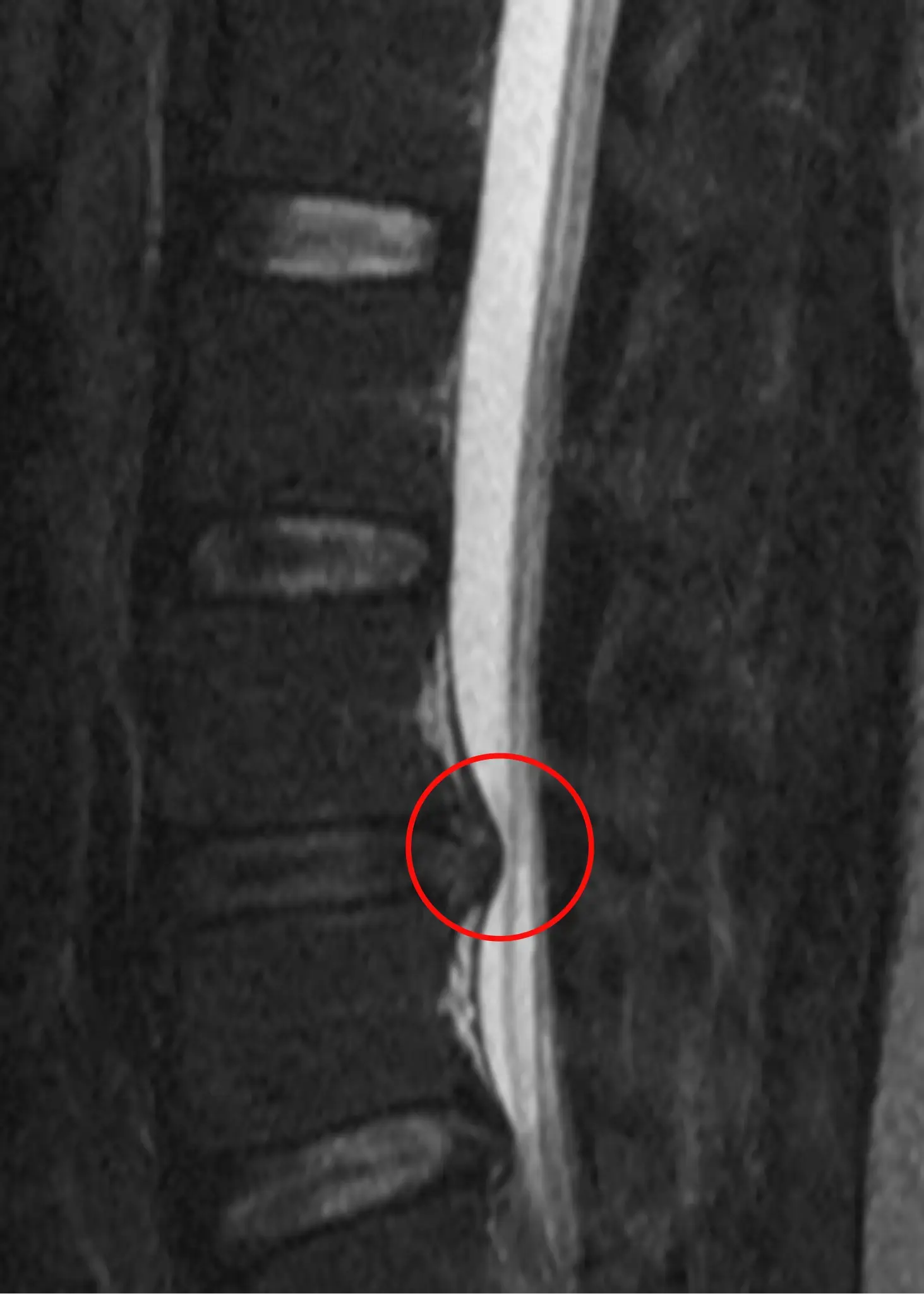
Diagnosis: Do You Need an MRI?
A clinical exam can often identify the likelihood of a disc herniation. In many cases, a detailed history and physical exam are enough to begin conservative care. However, if symptoms persist or worsen despite treatment, or if neurological signs like foot drop are present, an MRI may be ordered to confirm the diagnosis and rule out other conditions.

Symptoms to Watch For
A lumbar disc herniation can affect people in different ways, depending on which nerve root is involved and the severity of the herniation. Some people have severe pain, while others notice only numbness or weakness.
Common symptoms include:
- Localized lower back pain
- Pain that worsens with coughing, sneezing, sitting, or lifting
- Numbness or tingling along the affected nerve pathway
- Muscle weakness in the leg or foot
- Pain that worsens with coughing, sneezing, sitting, or lifting
What About Sciatica?
If the herniation compresses the sciatic nerve, symptoms can follow a classic pattern down the back of the leg. If the L4-L5 or L5-S1 disc is involved, you may notice difficulty lifting your foot (foot drop) or pushing off with your toes.
RED FLAGS:
When to Seek Immediate Help
While most herniated discs can be treated conservatively, there are certain symptoms that warrant immediate medical attention. These include:
Sudden loss of bladder or bowel control
Numbness in the groin or inner thighs (saddle anesthesia)
Progressive weakness in the legs
Loss of coordination in feet
These symptoms may indicate cauda equina syndrome, a rare but serious condition requiring emergency intervention.
How I Treat Lumbar Disc Herniation
I take a personalized approach to treating lumbar disc herniations. Your care plan is based on your specific symptoms, exam findings, and how your body responds over time. Here are some of the treatments I often use:

Lumbar Decompression
We use supine lumbar traction to gently stretch the spine and reduce pressure on the herniated disc and nearby nerve roots. This helps improve circulation to the disc and create space for healing.
Active Release Technique (ART)
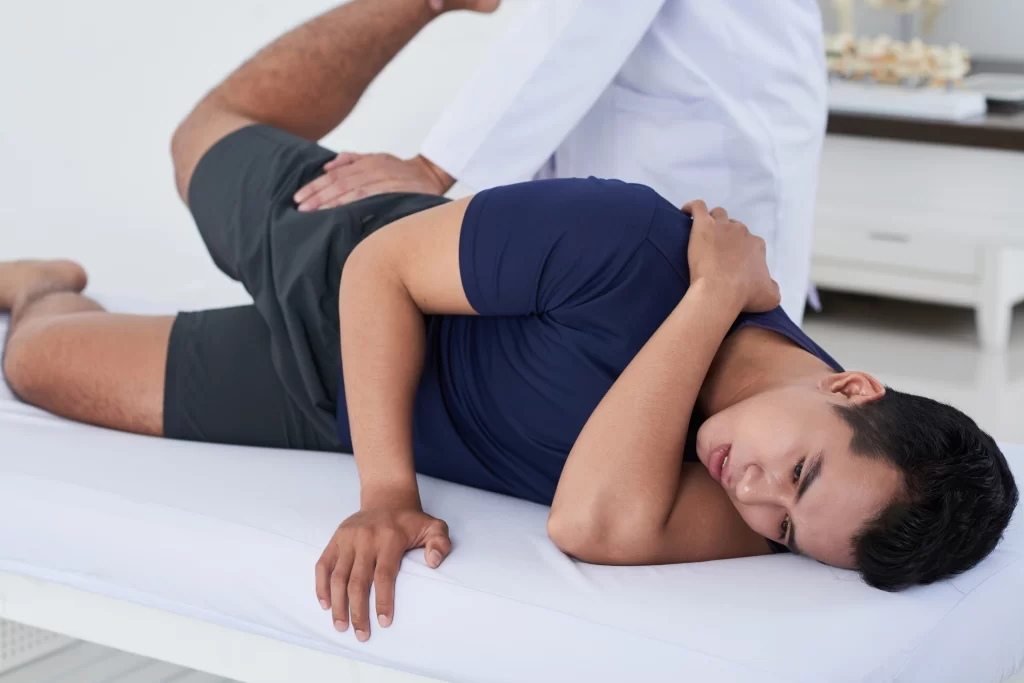
I use ART to release tight, overactive muscles that may be contributing to compression and movement dysfunction. Common targets include the quadratus lumborum, iliopsoas, piriformis, and erector spinae.
Manual Adjustments
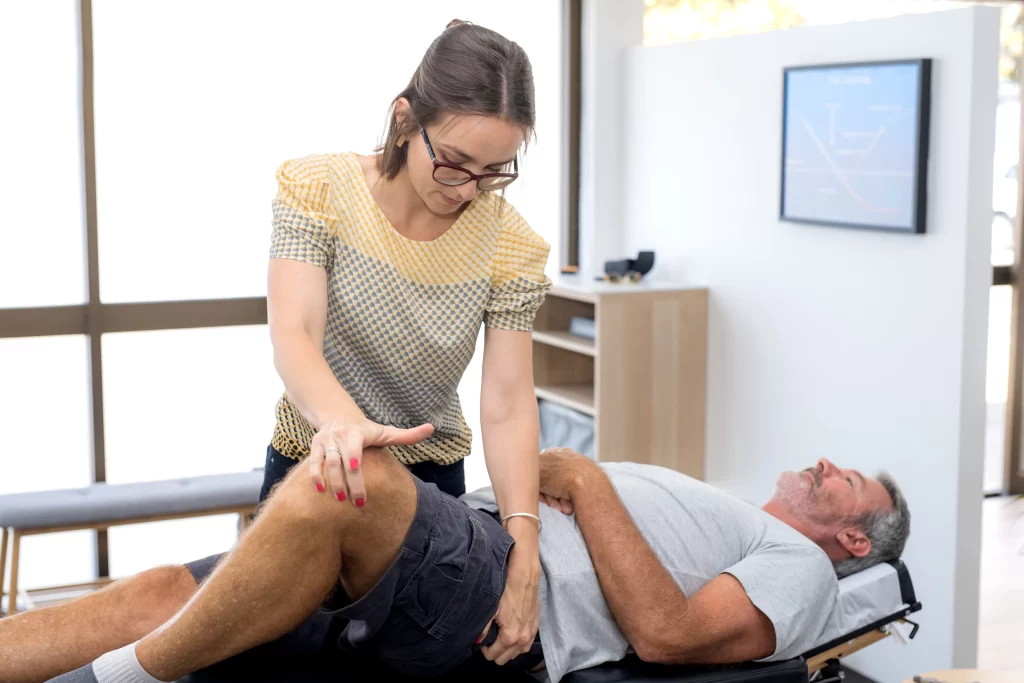
Safe, controlled spinal adjustments help restore motion to restricted joints, improve spinal alignment, and reduce mechanical stress on the discs and nerves.
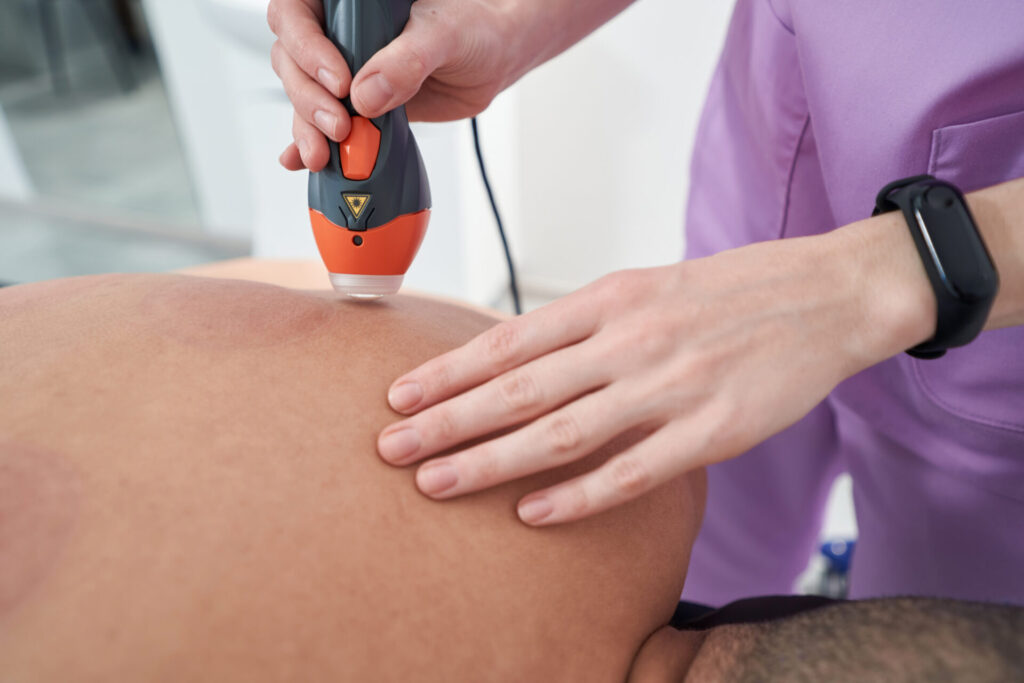
Infrared Laser Therapy
Our Class IV dual-wavelength infrared laser penetrates deep into tissue to reduce inflammation, improve circulation, and speed up the body’s natural healing process.
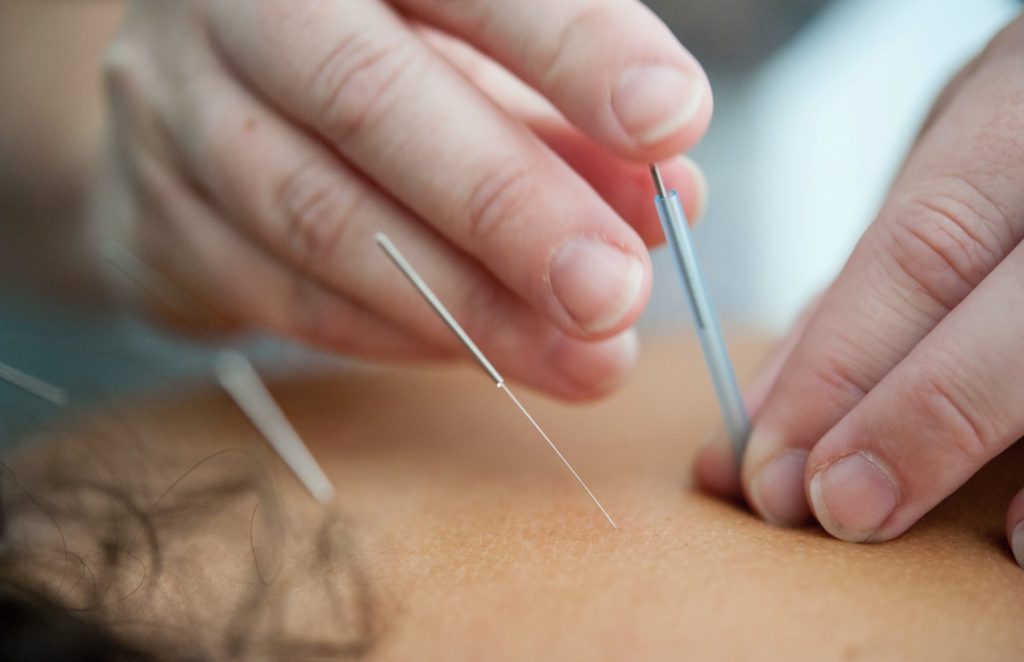
Dry Needling
Dry needling is used to deactivate trigger points and reduce muscle tension in areas that are guarding the spine or contributing to nerve irritation.
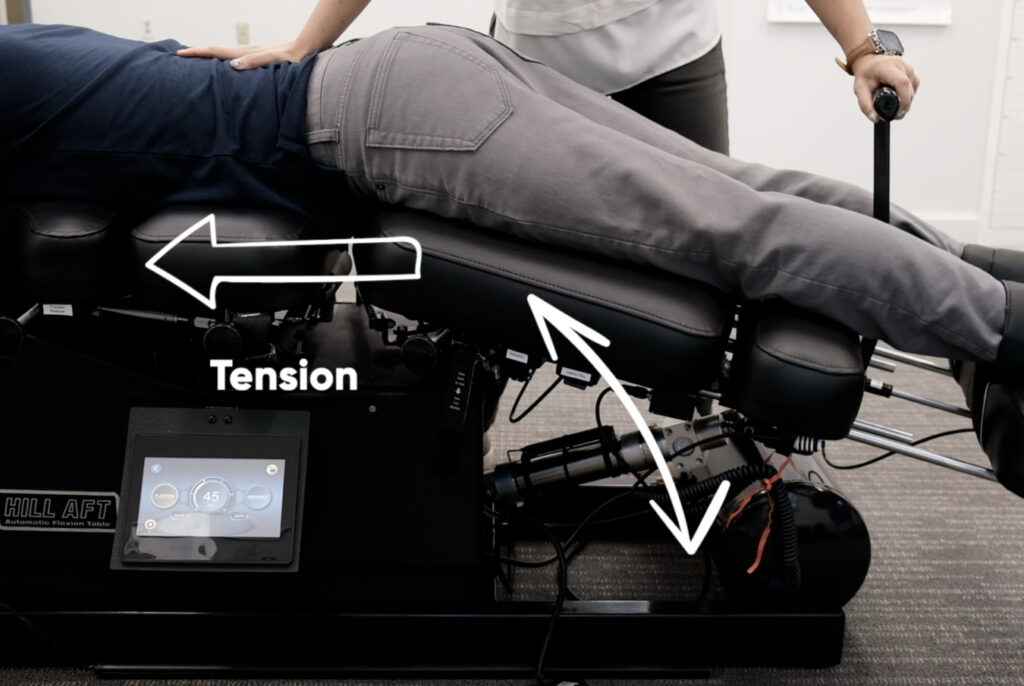
Flexion Distraction Therapy
This gentle, rhythmic spinal technique is performed on a specialized table that allows for segmental flexion of the lumbar spine. This is especially helpful for patients who can’t tolerate traditional adjustments.
All of these techniques are focused on reducing nerve irritation, improving function, and helping you return to the activities you love—whether that’s walking pain-free, running again, or simply getting through your workday without discomfort.
Preventing Future Disc Injuries
Once you’re feeling better, we’ll focus on long-term strategies to help prevent future flare-ups. This often includes:
Teaching proper lifting and bending mechanics
Core strengthening and movement retraining
Ergonomic recommendations for work or home
Running or exercise analysis if needed
Whether you’re an athlete, weekend warrior, or office worker, prevention is a big part of what we do here.
Recovery Timeline and Outlook
Most patients with lumbar disc herniation improve significantly within 6 to 12 weeks of consistent conservative care. Improvement usually begins with a reduction in leg pain, followed by a gradual return of strength and mobility.
That said, every patient is unique. Some recover quickly, while others need more time. My job is to help guide that process, monitor your progress, and adjust treatment as needed.
If you’re in the Charlotte area, contact Simply Move Chiropractic to schedule an evaluation. Let’s work together to get your neck—and your life—moving again.